Cloud Massage vs MIKO Foot Massagers: Which Is Better? (October 2026)
In the Cloud foot massager vs MIKO comparison, choose Cloud Massage for feet-to-calf positioning or MIKO for foot-focused compression and easier carrying. Your intended massage area and storage routine should guide the choice.
On this page (11 sections)
- Cloud foot massager vs MIKO: what is the main difference?
- Who should buy Cloud Massage, and who should skip it?
- Who should buy MIKO, and who should skip it?
- How should you choose between kneading and compression controls?
- Does either massager offer more heat control?
- Which machine will fit your feet and your room?
- How should you set up the first session?
- What care and storage habits matter most?
- Which common mistakes should you avoid?
- When is Renpho a better alternative to both?
- Cloud foot massager vs MIKO: which should you choose?
Choose Cloud Massage for feet-to-calf positioning or MIKO for foot-focused compression and easier carrying. The Cloud foot massager vs MIKO decision starts with where you want the massage and whether the machine will stay beside your chair.
Both combine kneading, compression and heat, but those shared features don't make them interchangeable. Cloud Massage lets you change the working angle, while MIKO puts more emphasis on defined air pressure choices.
If your priority is adjusting kneading and squeezing separately, the Renpho Shiatsu Foot Massager with Heat is a useful third option. Choose your main requirement before comparing smaller conveniences.

 Best for shared living rooms
MIKO Shiatsu Foot Massager with Air Compression
Cloud foot massager vs MIKO: what is the main difference?
The main difference is massage placement versus compression control. Cloud Massage serves buyers who want to move between feet, ankles and calves, while MIKO suits a routine centered on the feet.
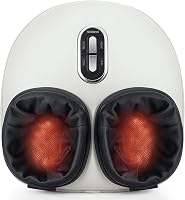
Cloud Massage uses an adjustable tilt bar to change the unit's angle. That matters if your calves need attention after standing or you want a different position without buying a separate leg massager.
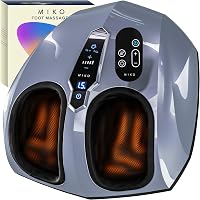
MIKO combines deep kneading and rolling with 5 air pressure settings and 3 massage modes. Its design leaves your ankles free, allowing some foot movement while you find a comfortable position.
Cloud Massage vs MIKO: which features change the decision?
Coverage, controls and carrying weight are the features most likely to change your choice. Use the table to identify your priority rather than adding up features as though every one has equal value.
| Feature | Cloud Massage | MIKO |
|---|---|---|
| Main massage area | Feet, ankles or calves | Feet |
| Positioning | Adjustable tilt bar | Ankles remain free |
| Pressure controls | Adjustable intensity and multiple modes | 5 air pressure settings and 3 modes |
| Heat | 2 levels | Included |
| Controls | Remote and onboard controls | Wireless magnetic remote |
| Dimensions | 20.87 x 17.32 x 9.06 inches | 18 x 16 x 10 inches |
| Weight | 22 lb | 10 lb |
Neither the number of modes nor the machine's weight tells you which massage will feel better. Those details help you choose the right controls and a practical place to use them.
Who should buy Cloud Massage, and who should skip it?
Buy Cloud Massage if calf and ankle positioning will be part of your routine. Its main advantage is giving you more ways to place your legs against the massage area.
Someone who spends much of the day standing may want foot massage one evening and calf massage another. This is the clearer choice when that change of area is a reason for buying, rather than an extra you might never use.
It also suits a regular relaxation spot where the unit can remain on the floor. Set up beside a suitable chair, it avoids the need to retrieve and put away a heavy machine each time.
Skip it if you'll only massage your soles and must carry the machine out of storage for every session. You're accepting extra bulk without making much use of its main positioning feature.
Buyers seeking a very gentle surface rub should also pause before choosing a deep-kneading machine. Adjustable intensity gives you options, but it doesn't guarantee that concentrated roller pressure will suit your feet.
Who should buy MIKO, and who should skip it?
Buy MIKO if foot compression is your priority and you'll regularly put the machine away. It is the more practical of these two for a living room that needs to return to shared use after a session.
Defined pressure steps suit someone who wants to start gently and make small changes to the squeeze. They also help you return to a familiar setting, although your preferred level may change from day to day.
The wireless magnetic remote attaches to the unit. Return it there after use so it doesn't disappear between chair cushions or get stored separately from the machine.
Skip MIKO if calf massage is the main reason you're shopping. Freedom around the ankles isn't the same as a design intended for positioning against the calves.
For more detail, read our MIKO Shiatsu Foot Massager with Air Compression review. The MIKO vs Renpho foot massagers comparison is more useful if you're already sure you want a foot-focused machine.
How should you choose between kneading and compression controls?
Choose by which sensation you want to adjust: kneading creates moving pressure, while air compression creates a squeeze. A machine with several modes can still feel wrong if the part you dislike remains too strong.
Think about an ordinary foot massage you enjoy. If focused pressure under the arch sounds appealing, rollers may be the main attraction; if being squeezed feels unpleasant, compression deserves closer attention.
Don't assume an intensity control changes every action independently. Cloud Massage offers adjustable intensity, while MIKO provides defined air pressure choices, but neither description establishes the same separate controls as Renpho.
That makes Renpho worth considering when you want slower kneading alongside a different squeezing level. It has 3 kneading speeds and 3 squeezing intensities that adjust independently.
More settings are useful when they solve a specific comfort problem. They aren't a reason to use stronger pressure, and the highest setting shouldn't become a goal.
Does either massager offer more heat control?
Cloud Massage offers 2 heat levels, making it the clearer choice if choosing a warmth setting matters. MIKO includes heat, but there isn't enough information here to rank their actual warmth against each other.
Treat heat as a comfort option rather than the main measure of massage quality. If you usually switch warmth off, give more weight to fit, massage area and pressure control.
Warmth also shouldn't persuade you to tolerate a tight fit or unpleasant kneading. You need to be comfortable with the mechanical massage before adding another sensation.
For an initial session, learn the pressure controls before adding heat if the instructions allow it. Changing one feature at a time makes it easier to recognize what feels comfortable.
Keep controls within reach so you can turn the unit off promptly. Don't fall asleep during use or rely on warmth to make painful pressure acceptable.
Which machine will fit your feet and your room?
Choose a machine that fits your feet, chair and storage space, not just an empty patch of floor. MIKO has a smaller footprint, while Cloud Massage needs more carrying effort and room for its different positions.
Measure the floor beside your intended seat, including space for your legs and a safe cord route. Also check the cabinet or shelf where the unit will live, rather than assuming it will fit under furniture.
Sit in the chair before ordering and look at where your feet naturally rest. A deep seat or low chair can make it awkward to keep your legs relaxed over a floor machine.
Cloud Massage is described as standard size, which isn't a precise foot-size limit. Confirm fit for unusually large, wide or high-volume feet, and do the same for MIKO rather than guessing from the outer dimensions.
Our foot massager fit guide for large feet explains why shoe size alone may not settle the question. Your feet should enter and leave comfortably without forcing them into place.
How should you set up the first session?
Start seated, at low intensity, with a brief session that stays within the manual's limits. The first goal is to learn the controls and find a relaxed position.
Place the machine on a dry, level surface and keep the power cord away from your walking route. Leave access around it so you can sit down and remove your feet without twisting.
For Cloud Massage, set the tilt position before starting and follow the instructions for the area you want to massage. Don't improvise a calf position by balancing the machine on furniture or loose supports.
For MIKO, sit so your legs aren't pulling your feet against the edges. Keeping the ankles free is useful only if the rest of your seated posture feels comfortable.
Cloud Massage recommends socks as a cushioning option when the massage feels too strong. Lower the intensity as well, and stop if the pressure remains uncomfortable.
Keep the remote beside your hand and make one setting change at a time. Our guide to using a foot massager covers the broader setup and session habits.
What care and storage habits matter most?
Keep either machine dry, unplugged during cleaning and stored where it is easy to retrieve. A care routine you can manage after each session matters more than an extra massage mode.
Use clean, dry feet or socks, and keep drinks away from the machine. These are dry electric massagers, so don't add water, oils or foot-soak products to the massage area.
Follow the manual's cleaning method for the surfaces that touch your feet. Don't assume a liner can be removed or washed simply because another model has that feature.
Let any cleaned surface dry fully before reconnecting power. Avoid spraying cleaner into openings, soaking the housing or using the power cord to pull the machine out of storage.
For a shared household, cleaning access is worth considering before buying. Renpho's removable foot covers give it a clear feature to compare, though their care instructions still determine how you should wash them.
Which common mistakes should you avoid?
Avoid choosing by strength alone or using extra pressure to compensate for poor fit. A comfortable low setting is more useful than a powerful routine you keep cutting short.
The most common buying and use errors are easy to prevent:
- Buying calf flexibility you won't use. Choose Cloud Massage because you want its positioning options, not because wider coverage automatically sounds better.
- Ignoring the storage trip. Picture lifting the unit from its actual storage spot, carrying it to the chair and putting it back afterward.
- Changing every control at once. Adjust pressure, mode and heat separately so you can identify what caused discomfort.
- Treating deep pressure as proof of benefit. Stronger squeezing or kneading isn't a target, and discomfort is a reason to stop.
- Forcing a cramped fit. Don't press down with your body weight or try to push your feet deeper into the massage area.
- Using a timer as a recommended duration. An available session length doesn't mean you need to complete it, especially when you're learning your preferences.
Ask a health professional before use if you have ongoing pain, reduced sensation or a condition that could make pressure or heat unsafe. Neither model should replace care for an unexplained foot problem.
When is Renpho a better alternative to both?
Choose Renpho if separate kneading and squeezing adjustments or removable covers matter more than calf positioning. It addresses a different buying priority from the main Cloud Massage and MIKO choice.
Its 15- or 30-minute auto-off timer gives you session options, and it fits up to US size 13. That stated limit is useful for screening fit, though foot width and comfort still deserve attention.
Skip it if you need a machine specifically intended for positioning against your calves. A higher score doesn't make it the right answer to a different massage-area requirement.
For a wider shortlist, see the best foot massagers for home. You can also browse the brands and models guide if another control layout or design would better suit your routine.
Cloud foot massager vs MIKO: which should you choose?
Choose Cloud Massage when you have a regular place for it and will use the calf and ankle positions. Choose MIKO when your routine centers on your feet and you need to put the machine away afterward.
Before ordering, settle 3 practical questions: where you'll sit, where the machine will live and whether your feet fit comfortably. Those answers are more useful tie-breakers than choosing the machine with the longest feature list.
If your remaining concern is controlling the squeeze separately from the kneading, compare the Renpho Shiatsu Foot Massager with Heat. That is the more relevant next step than choosing either main contender by brand alone.
Frequently asked questions
Is Cloud Massage or MIKO better for foot massage?
Cloud Massage is the better fit for changing between feet, ankles and calves, while MIKO suits foot-focused compression and frequent storage. Start with the area you want to massage, then consider fit and carrying weight; extra settings won't help if the machine is awkward to use.
Does the Cloud Massage foot massager have heat?
Yes, Cloud Massage has 2 heat levels, so you can choose between warmth settings during your routine. MIKO also includes heat, but that doesn't establish which machine will feel warmer to you; choose Cloud Massage if having a choice of heat levels is a priority.
How does MIKO's air compression compare with Cloud Massage?
MIKO provides 5 air pressure settings, giving you defined steps for changing the squeeze around your feet. Cloud Massage also includes compression and adjustable intensity, but don't assume their settings match; a middle setting on one machine isn't a pressure benchmark for the other.
Which foot massager is easier to move?
MIKO is easier to consider for frequent carrying because it weighs 10 lb, compared with Cloud Massage at 22 lb. Your own lifting comfort still matters, especially when reaching down to the floor; choose a storage spot that doesn't require stairs or an awkward lift.
Can I use a foot massager every day?
Follow your model's instructions rather than assuming daily use suits everyone, and stop if massage causes discomfort. Begin with a brief session at low intensity; ask a health professional about suitability first if you have ongoing pain, reduced sensation or a condition that could make heat or pressure unsafe.