MIKO vs Renpho Foot Massagers: Which Is Better? (October 2026)
In this MIKO vs Renpho foot massager comparison, choose MIKO for finer compression adjustment or Renpho for separate kneading and squeezing controls. Renpho also offers removable foot covers and fit guidance up to US size 13.
On this page (11 sections)
- MIKO vs Renpho foot massager: what is the main difference?
- Which controls will you actually use?
- Which one is a better fit for your feet?
- How much does heat matter in this comparison?
- Which is easier to clean and share?
- Will either massager fit beside your chair?
- How should you start your first session?
- What mistakes make either model a poor buy?
- Who should skip both MIKO and Renpho?
- Which should you buy: MIKO or Renpho?
- Sources
In this MIKO vs Renpho foot massager comparison, choose MIKO if fine-tuning compression matters most, or Renpho if you want separate kneading and squeezing adjustments plus removable foot covers.
Both combine shiatsu kneading, rolling, air compression and heat, with remote controls for seated use. The useful differences are how you adjust the massage, how confidently you can assess fit and how you'll care for the fabric.
Renpho is the more practical default for buyers who value those fit and cleaning details. MIKO makes more sense when pressure adjustment is the feature you'll use most.
 Best for compression-focused routines
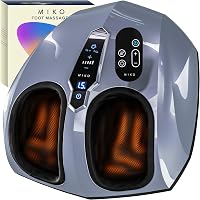
MIKO Shiatsu Foot Massager with Air Compression

MIKO vs Renpho foot massager: what is the main difference?
MIKO gives you more compression steps; Renpho separates kneading speed from squeezing intensity. That distinction matters more than the massage terms the two models share.
Kneading and rolling create moving pressure beneath your feet. Air compression adds a squeeze around them, so changing one sensation doesn't necessarily solve discomfort caused by the other.
MIKO offers 5 air pressure settings and 3 massage modes. Renpho provides 3 kneading speeds and 3 squeezing intensities, independently adjustable.
More pressure levels don't prove that a machine is stronger, gentler or more effective. Neither brand provides a shared pressure scale that lets you compare matching numbers directly.
For other brand choices, see Cloud Massage vs MIKO foot massagers and Renpho vs Nekteck foot massagers.
Which controls will you actually use?
Choose controls around the sensation you want to change. Buyers who mainly adjust the squeeze have different needs from those who want slower kneading without giving up compression.
MIKO vs Renpho controls for your routine
MIKO suits someone who wants to work through smaller steps within its compression range. Its wireless magnetic remote attaches to the unit, giving you a clear place to store it between sessions.
That attachment is useful beside a sofa, where a loose remote can disappear between cushions. Keep it reachable before starting so you don't need to shift your seated position to make changes.
Renpho suits someone who likes one part of a massage but wants to ease another. You can select kneading speed separately from squeeze strength, which helps when the moving pressure feels comfortable but compression feels too firm.
Skip MIKO if your decision depends on confirmed independent control of every function. Its modes and pressure options don't establish that same level of separation.
Skip Renpho if choosing among more compression steps is your main requirement. Its separate controls solve a different problem.
Our Renpho Shiatsu Foot Massager with Heat review covers that model in more detail. For the massage terms themselves, read shiatsu vs kneading massagers.
Which one is a better fit for your feet?
Renpho offers clearer size guidance, but either machine needs room around your whole foot. Renpho states a fit up to US size 13; confirm MIKO's interior fit before buying if you need a firm size limit.
Length is only one part of fit. A wide forefoot or high instep can feel crowded even when your shoe size falls within a machine's stated range.
Your heel should settle naturally, and your toes shouldn't need to curl to fit. Don't force your foot farther inside just to line up an uncomfortable pressure point.
Compression reduces the available space during use. A chamber that feels roomy while switched off can feel quite different once the air squeeze starts.
MIKO says its design leaves your ankles free to move. That may appeal if you dislike a confined feeling, but it doesn't establish extra width or toe room.
For larger or wider feet, use our foot massager fit guide to work through the measurements and fit questions before choosing.
When CuPiLo is worth considering
CuPiLo is worth considering if you want to use functions separately rather than choose between the two main models' control layouts. Kneading, compression, vibration and heat each have independent controls.
It fits up to about men's size 13, though width and instep height affect fit. CuPiLo advises starting with gentle compression for wide feet or high insteps.
Don't add this third option to your shortlist solely because it has more functions. Choose it when you can name a combination you'd use, such as warmth without kneading or massage without vibration.
For a closer look at MIKO's design and controls, read our MIKO Shiatsu Foot Massager review.
How much does heat matter in this comparison?
Treat heat as a comfort feature, then choose the massage controls and fit first. Both models include warmth, but there isn't enough temperature information to rank one as warmer.
Renpho specifies heat up to 122°F (51°C) and recommends switching it on 10 minutes before use. That adds a planning step if you want warmth as soon as you sit down.
A stated temperature doesn't tell you exactly how warm your feet will feel. Socks, room temperature and your own sensitivity can affect that experience.
MIKO's supplied details don't establish a heat temperature, so avoid choosing it on an assumed temperature match. Neither model should be chosen on the idea that hotter always means better.
If warmth is the main reason you're buying, decide whether you also want moving pressure and a squeeze. Someone who dislikes either sensation should reconsider this type of machine before focusing on heat alone.
Which is easier to clean and share?
Renpho is the clearer choice when removable fabric covers matter. They're useful for keeping the areas that touch your feet on a regular cleaning schedule.
Removal doesn't establish a washing method. Follow Renpho's instructions for the covers, including how to dry and refit them.
Confirm MIKO's cover removal and care process if easy fabric cleaning is a deciding factor. This matters most when several people will use the same machine or when you expect frequent sessions.
Unplug the unit before cleaning, and keep liquid out of the controls and foot chambers. Use only the surface-cleaning method allowed in the manual, and let cleaned parts dry fully before use.
Avoid foot lotion or oil immediately before a session unless the instructions allow it. Residue can transfer to the fabric and make routine cleaning harder.
For a wider comparison of care and massage features, see our best foot massagers for home guide.
Will either massager fit beside your chair?
Both need a clear floor space roughly 18 inches long and 16 inches wide, plus room to move your feet. Measure the place where you'll actually sit, rather than judging size from a photo.
MIKO measures 18 x 16 x 10 in and weighs 10 lb. Renpho measures 18.5 x 15.94 x 11.22 in and weighs 8.49 lb.
Renpho is lighter to carry, while MIKO has a lower outer height. Neither difference guarantees a better fit under your desk because your knees, chair position and foot entry also need clearance.
Sit in your usual chair and mark out the footprint before ordering. Check that you can keep your knees comfortable without reaching forward or sliding to the edge of the seat.
Plan storage as well as use. A low shelf may be awkward if lifting from floor level is difficult, and a cupboard across the room adds a carrying step to every session.
Keep the power cord out of walking routes. A convenient position beside your chair is only useful if you can leave enough space to get up safely.
How should you start your first session?
Begin seated, with the lowest massage settings and a short session. Use the manual for the exact controls, approved footwear and session limits.
Place the machine on a stable, dry floor before inserting your feet. Keep the remote within reach and make sure you can remove your feet without twisting your legs or moving the chair.
Check fit while the machine is off, then start gently. Change one setting at a time so you can tell whether kneading, compression or heat is causing an unpleasant sensation.
Don't press your feet down hard to chase a stronger massage. Added force can turn comfortable pressure into a sharp spot, especially under the arch.
MIKO includes a built-in timer; Renpho offers 15- or 30-minute auto-off options. A timer is a stopping aid, not a target you must reach.
End the session sooner if you feel discomfort, and don't fall asleep with your feet inside. Read our guide to how to use a foot massager for a fuller start-up routine.
What mistakes make either model a poor buy?
The biggest mistakes are buying by maximum intensity, shoe size alone or promises of pain relief. A useful machine needs to fit your feet, your chair and your preferred sensation.
Choosing the strongest setting first
Start low even if you usually enjoy firm massage. A machine's moving nodes and air squeeze apply pressure differently from a person using their hands.
A stronger session isn't automatically a more useful one. If you tense your legs or pull away from the pressure, reduce the setting or stop.
Using repeated cycles to chase a result
Don't restart the machine repeatedly because your feet still feel tired. Follow the manual's session and rest guidance rather than assuming the auto-off makes unlimited use suitable.
Forcing a longer routine also makes it harder to judge how your feet respond afterward. Choose a session you can use comfortably and consistently.
Expecting one machine to suit everyone
Shared households should assess each person's fit and preferred pressure separately. Someone else's comfortable setting is a poor starting point for your first session.
If one user needs spacious chambers and another wants a close squeeze, fit may matter more than the feature list. Check the return terms before committing to a model that several people need to share.
Who should skip both MIKO and Renpho?
Skip both if you dislike enclosed foot chambers or want complete control over where pressure lands. These machines follow their built-in massage paths, so they won't place every movement exactly where you want it.
They also aren't a sound choice if your available floor space forces an awkward seated position. Reaching your feet forward or crowding your knees can make a relaxing routine inconvenient.
If you have ongoing foot pain, reduced sensation or a condition affecting your feet, ask a health professional whether heated compression massage is suitable. Don't choose either model as a treatment for a diagnosed condition.
Stop if use causes pain, numbness or skin irritation. Our guide to foot massager safety explains the main precautions before you begin.
Which should you buy: MIKO or Renpho?
Pick Renpho for a routine built around separate adjustments and easier fabric care; pick MIKO when compression adjustment is your deciding feature. Settle fit first, then choose the controls you'll reach for most often.
Renpho is the stronger default for a household where users want different combinations of kneading and squeezing. It also makes sense if removable covers are part of your planned cleaning routine.
MIKO suits a buyer who wants to fine-tune the squeeze and keep the remote attached between uses. Choose it once you've confirmed that its interior fit and cover care meet your needs.
CuPiLo belongs on the shortlist when using individual functions alone is essential. Its separate controls offer a specific reason to look beyond the main pair.
| Product | Best for | Massage | Controls | Size | Our score |
|---|---|---|---|---|---|
| MIKO Shiatsu Foot Massager with Air Compression | compression-focused routines | Kneading, rolling and compression | 5 air pressure settings, 3 modes | 18 x 16 x 10 in; 10 lb | 8.9 |
| Renpho Shiatsu Foot Massager with Heat | shared households | Kneading, rolling and compression | 3 kneading speeds, 3 squeezing intensities | 18.5 x 15.94 x 11.22 in; 8.49 lb | 9.1 |
| CuPiLo Foot Massager with Remote | varied massage routines | Kneading, compression and vibration | Independent function controls, 5 compression levels | 13.66 x 7.64 x 17.6 in; 6.75 lb | 6.9 |
The final MIKO vs Renpho foot massager decision should come down to one everyday need: finer squeeze adjustment or separate controls with removable covers. If neither matches the way you want to relax, use our foot massager guide to compare other designs.
Sources
The links below identify the exact MIKO and Renpho models compared here. Match the model before buying, since features can differ across a brand's range.
- MIKO Shiatsu Foot Massager with Air Compression: See it on Amazon
- Renpho Shiatsu Foot Massager with Heat: See it on Amazon
Frequently asked questions
Is MIKO or Renpho better for foot massage?
Renpho is the better fit if you want separate kneading and squeezing adjustments plus removable foot covers. MIKO suits a routine centered on changing compression pressure, with more air settings and a magnetic remote.
Choose by fit and preferred controls rather than expecting either brand to suit every foot.
Which has more compression settings, MIKO or Renpho?
MIKO has 5 air pressure settings, while Renpho has 3 squeezing intensity levels. Those extra steps offer more choices within MIKO's range, but they don't show which machine squeezes harder.
The brands don't provide a shared pressure scale, so compare adjustment options rather than assuming equal strength at matching levels.
Does the Renpho foot massager fit size 13?
Renpho states that this model fits up to US size 13. Use that as a starting point, then consider foot width, instep height and room around your toes.
A maximum size doesn't guarantee a comfortable fit, especially once compression starts, so begin at the lowest settings.
Can you remove the foot covers on MIKO and Renpho?
Renpho has removable foot covers for cleaning; confirm cover removal and care with MIKO if that feature determines your choice. Follow the instructions for the exact model before washing fabric.
Removable doesn't automatically mean machine washable, and covers should be fully dry before you put them back.
Does MIKO or Renpho have a wireless remote?
MIKO includes a wireless magnetic remote that attaches to the unit. Renpho also includes a remote for seated control, but magnetic attachment isn't specified for its model.
Both reduce the need to reach down during a session; MIKO's attachment gives its remote a designated storage spot.